
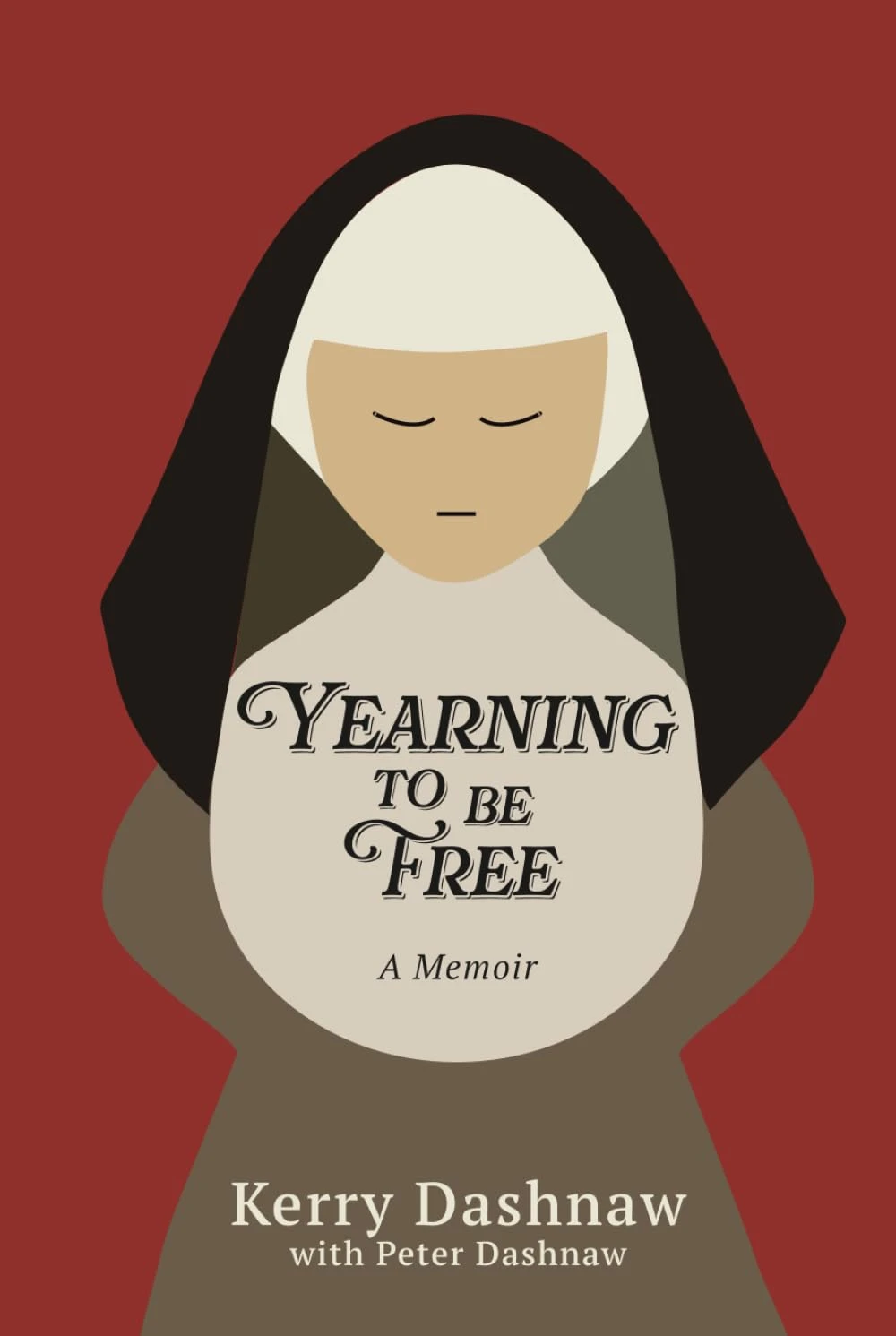
Yearning to be Free
Ready to Read It?
Use the button or the permanent True Voice Review purchase link.
TrueVoiceReview.com/b/yearning Scan to Buy the Book
Quick Take
Yearning to be Free is a moving spiritual memoir about obedience, disillusionment, and one woman’s hard-won recovery of voice, freedom, and faith beyond institutional control.
Short Review
Yearning to be Free by Kerry Dashnaw is a candid and carefully observed memoir about a young woman’s fourteen years inside a strict Catholic religious order and her long journey back to personal freedom. Raised in an intensely Catholic household, Kerry enters the convent as a teenager believing that obedience, sacrifice, and religious devotion will bring her closer to God. Instead, the life she embraces slowly strips away her ability to choose, question, and trust her own voice.
The book is strongest when it captures the contrast between the beauty that first attracted Kerry to the convent and the emotional cost of living under rigid authority. Dashnaw writes with particular force about clothing, silence, rules, rituals, and the psychological weight of obedience. The alternating therapy scenes give the memoir depth, allowing the past to be revisited through the eyes of a woman trying to understand what happened to her.
This is not a fast-paced memoir. Its power builds through accumulation, detail, and repetition, which may challenge readers who prefer a tighter narrative. But for readers interested in spiritual memoirs, religious trauma, Catholic life after Vatican II, or stories of women reclaiming agency, Yearning to be Free offers a moving and worthwhile account.
The book is ultimately not anti-faith; it is pro-conscience, pro-healing, and deeply concerned with the cost of surrendering one’s identity to any institution.
Full Review
Yearning to be Free by Kerry Dashnaw is a thoughtful, emotionally candid memoir about religious devotion, obedience, disillusionment, and the long, difficult process of reclaiming personal agency. The book follows Kerry from a deeply Catholic childhood in the 1960s into her entrance, as a teenager, into a strict conservative order of Catholic sisters. What begins as a romantic and spiritual longing for holiness gradually becomes a life shaped by control, silence, fear, and self-erasure.
The memoir’s central strength is its ability to hold two truths at once. It does not treat Kerry’s early attraction to convent life as foolish or shallow. The young woman who dreams of the Raphaelite Sisters is imaginative, devout, theatrical, and sincere. The convent initially appears as a place of beauty, mystery, order, and spiritual purpose. Dashnaw captures the emotional pull of ritual, habit, music, Catholic iconography, and idealized sacrifice with enough care that readers can understand why a teenager might believe this life was not only possible, but holy.
That balance gives the book its moral weight. Yearning to be Free is not a simplistic attack on faith. It is a memoir about what happens when faith becomes entangled with authoritarian structures, emotional dependency, and the surrender of ordinary human choice. The book is at its sharpest when it shows the slow narrowing of Kerry’s world: permissions, rules, superiors, silence, bodily restrictions, emotional suppression, and the repeated message that obedience is the highest form of love. The result is not one dramatic collapse but a gradual interior erosion.
The structure moves between convent memories and later therapy sessions, allowing the adult Kerry to revisit the past with the help of Dr. Hughes. This framing gives the memoir shape and psychological depth. The therapy scenes are among the book’s most compelling passages because they let the reader witness a woman beginning to name what she had been trained not to question. Anger, grief, confusion, humor, and longing surface in uneven but believable ways. The book understands that freedom is not merely walking out a door; it is learning to think, feel, choose, and speak after years of being trained not to.
Dashnaw’s prose is direct and accessible, often strongest in scenes built around physical detail: the weight of the habit, the austerity of a convent cell, the ache of standing straight, the sound of bells, the contrast between colorless religious life and the vivid world beyond it. The memoir also benefits from recurring figures, especially Brenda, whose friendship provides warmth, humor, and a reminder of the wider life Kerry might have had. The early scenes between the two friends bring welcome brightness and mischief before the convent sections grow more constrained.
Some readers may find the book’s pacing deliberate. The manuscript devotes considerable attention to convent routines, rules, personalities, and internal struggles. For readers drawn to spiritual memoirs, religious trauma narratives, or detailed accounts of closed communities, that immersion will be a strength. Readers looking for a faster, more compressed memoir may feel the middle sections linger. The book’s emotional arc is clear, but its method is cumulative rather than swift.
The memoir’s most affecting theme is the difference between vocation and coercion. Kerry enters seeking God, beauty, and purpose, but the deeper question becomes whether a calling can remain sacred when a person’s ability to consent has been weakened by fear, authority, and dependency. That question gives Yearning to be Free its contemporary relevance. It speaks not only to former religious communities but to anyone who has had to separate personal faith from institutional control.
By the end, the book becomes less a story of escape than a story of restoration. Dashnaw writes about pain without turning the memoir into misery, and she writes about freedom without pretending it arrives cleanly or easily. The later chapters offer hope, but not cheap resolution. What remains is the portrait of a woman who had to recover her own name, body, voice, friendships, faith, and future.
Yearning to be Free is a sincere, memorable memoir with a clear emotional purpose. It will resonate most with readers interested in Catholic history, women’s religious life, spiritual abuse, recovery, and memoirs of self-discovery after institutional control.
Pull Quotes
Content Notes
• Language: Mild; little to no explicit profanity.
• Violence: Mild to moderate; includes emotional intimidation, spiritual coercion, family rage, and references to religious self-mortification.
• Sexual Content: Minimal; references to celibacy, marriage, and intimacy are non-graphic.
• Drugs/Alcohol: Mild; brief references to medication, drinking, and social alcohol use.
• Sensitive Topics: Religious trauma, emotional abuse, depression/despair, authoritarian control, grief, medical trauma/surgery, and recovery through therapy.