
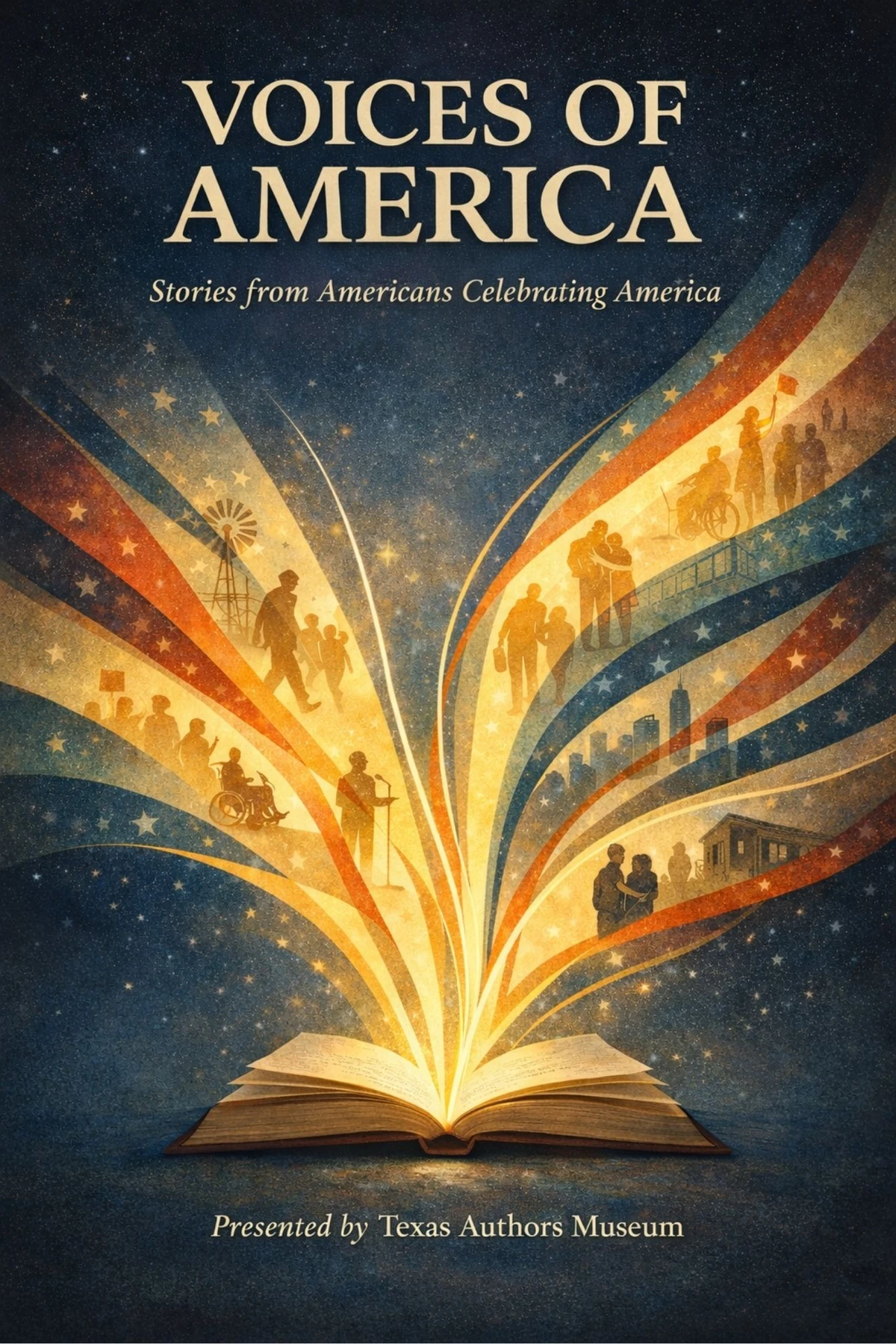
Voices of America
Ready to Read It?
Use the button or the permanent True Voice Review purchase link.
TrueVoiceReview.com/b/voicesameric Scan to Buy the Book
Quick Take
The collection’s best pieces are intimate without being small, political without becoming lectures, and moving without begging for admiration. Voices of America works because it trusts character over rhetoric and scene over sermon.
Short Review
Voices of America is a socially engaged anthology that asks what citizenship, belonging, and responsibility look like in contemporary America, then answers through a wide range of intimate, grounded stories. The collection includes veterans carrying trauma after patriotic spectacle, Black parents teaching sons how to survive suspicion, disabled workers negotiating dignity in a productivity culture, immigrant families building lives under the pressure of paperwork, and parents trying to explain school lockdown drills to children who already understand too much.
The book’s greatest strength is its human scale. Even when the subject is systemic failure, the storytelling stays rooted in character, scene, and voice. “After the Fireworks,” “Sunday Suit, Monday Steel-Toes,” “Apartment 3B, No Mailbox Key,” “The Neighborhood App,” and “Lockdown Drill Tuesday” are especially effective at showing how national problems become private burdens without turning their characters into symbols.
The prose is thoughtful and accessible, with a literary sensibility that favors reflection over melodrama. Readers who like contemporary issue-driven fiction, civic themes, and emotionally observant storytelling will find a lot to admire here. Readers looking for lighter fare or sharply plot-driven stories may find the anthology heavy in tone and consistent in its moral seriousness.
As a whole, Voices of America is a strong anthology with a clear purpose and a humane eye. It works best for readers who want fiction that treats American life not as branding, but as a contested, daily practice shaped by labor, fear, endurance, and care.
Full Review
Voices of America is an anthology built around a deceptively simple question: what does it mean to be American now? Rather than answering with slogans, the collection moves through short fiction and reflective narratives about work, citizenship, disability, race, queerness, homelessness, war memory, school fear, and belonging. The table of contents alone signals that range, moving from stories such as “After the Fireworks” and “Sunday Suit, Monday Steel-Toes” to “Apartment 3B, No Mailbox Key,” “Lockdown Drill Tuesday,” and “Seeing Both Sides Is a Bitch.”
The strongest throughline is the anthology’s commitment to ordinary lives under pressure. In “After the Fireworks,” a stadium maintenance worker and veteran moves through a July Fourth spectacle while managing trauma, paternal guilt, and the uneasy distance between patriotic display and lived service. The story frames America not as a symbol but as cleanup, labor, memory, and survival after the applause fades. In “Sunday Suit, Monday Steel-Toes,” a Black father navigating church, construction work, and the policing of his teenage son gives the anthology one of its sharpest emotional centers. That story captures the split reality of dignity and precarity with unusual steadiness, never reducing its characters to arguments.
Other entries widen the book’s social map without losing intimacy. “Good Days Count Twice” explores chronic illness and disability through a character whose pain is repeatedly measured against productivity and public convenience, turning workplace accommodation into a question of personhood. “Apartment 3B, No Mailbox Key” brings immigration status, bureaucracy, and family love into the same cramped apartment, arriving at a moving idea of citizenship as stewardship rather than paperwork alone. “The Neighborhood App” is one of the collection’s clearest pieces of social observation, tracing how comfort, fear, and digital rumor reshape a neighborhood’s view of homelessness. “Lockdown Drill Tuesday” may be the most quietly devastating story in the book, filtering the logic of school safety through a child’s blunt question about whether a classroom door can stop bullets.
Stylistically, the anthology leans literary but remains accessible. The prose favors clean, observant sentences, strong scene work, and reflective endings that circle back to the book’s civic concerns. Many pieces close by explicitly confronting the question of American identity, which gives the collection cohesion while still allowing the authors distinct angles of entry. The recurring strengths are tonal control, humane characterization, and a refusal to simplify structural problems into neat inspirational lessons.
Thematically, the book is serious, contemporary, and often bruised, but not despairing. Even when these stories deal in fear, exclusion, bureaucracy, or trauma, they tend to look for forms of endurance rather than catharsis. A veteran keeps working. A mother keeps answering impossible questions. A disabled worker insists that bad days count too. An immigrant family keeps building a life inside a system that does not fully recognize them. A suburban parent learns that decency without visibility is often just insulation.
The limitations are tied to the same ambition that gives the anthology its force. Readers looking for escapism, plot-heavy twists, or broad tonal variety may find the book relentless in its social focus. Many entries are politically alert and morally serious, and some readers may feel the repetition of civic reflection from story to story. The collection is also less interested in surprise than in recognition; it wants readers to sit with tensions rather than be dazzled by narrative mechanics. That will be a strength for some audiences and a barrier for others.
Still, Voices of America succeeds where many issue-driven anthologies do not: it remembers that readers meet ideas through people. These stories are not policy memos in costume. They are grounded, emotionally literate portraits of people trying to live decently inside systems that are often indifferent, contradictory, or cruel. The result is a collection that feels timely without reading like a trend piece, and humane without softening the pressure its characters live under. For readers who want contemporary American fiction that takes citizenship, vulnerability, labor, and moral ambiguity seriously, this anthology has real weight.
Pull Quotes
Content Notes
• Language: Mild to moderate profanity; occasional strong language, including “bitch,” “damn,” and “hell.”
• Violence: Mild to moderate; threat-based tension involving war trauma, policing, and school lockdown fears, but little to no graphic gore.
• Sexual Content: None to minimal in the reviewed material; no clear explicit on-page sexual scenes found.
• Drugs/Alcohol: Occasional alcohol use and references, including beer and wine.
• Sensitive Topics: PTSD/war memory, racism and racial profiling, disability/chronic illness, immigration precarity, homelessness, school-shooting anxiety, political stress, and queer identity under pressure.