
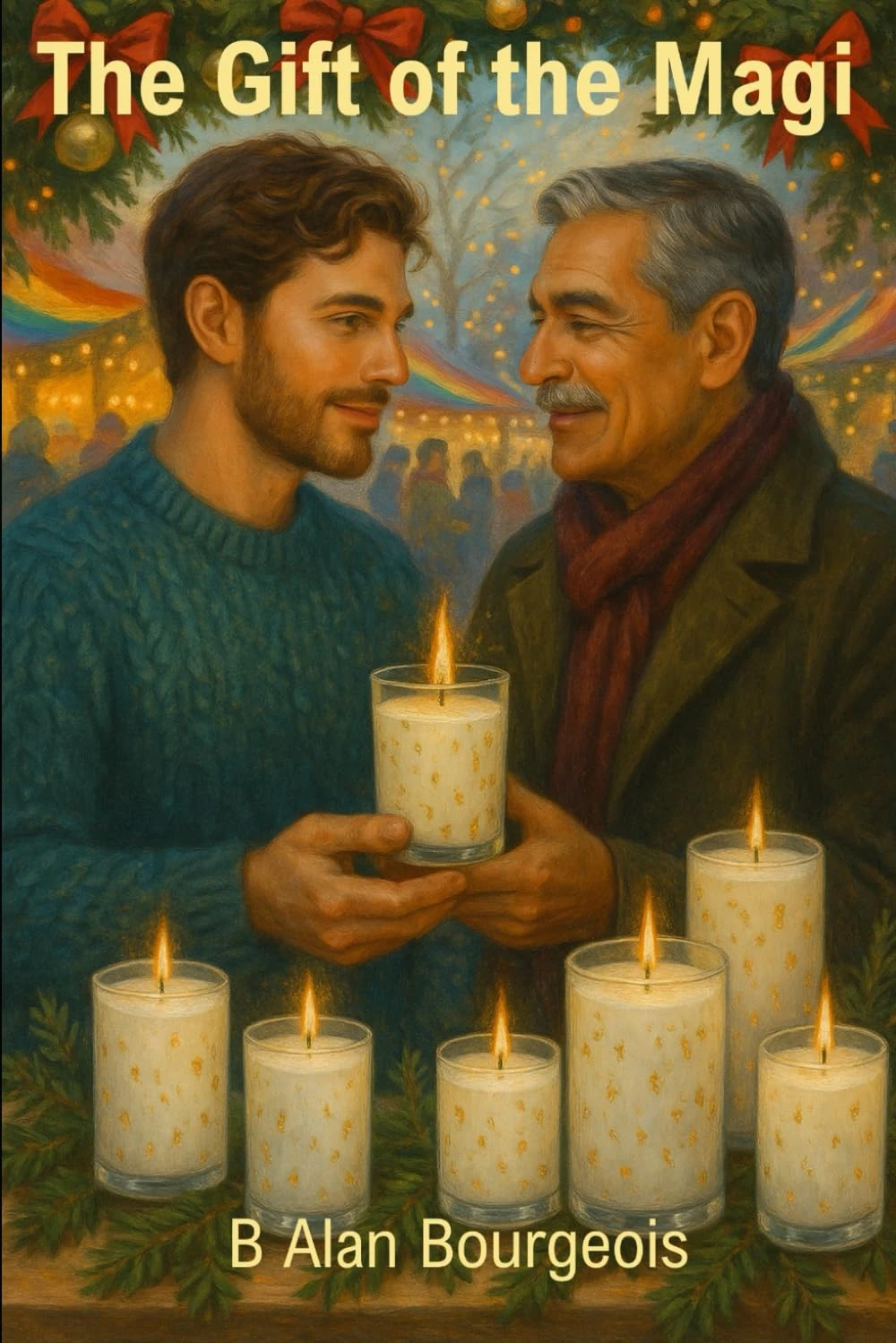
The Gift of the Magi
Ready to Read It?
Use the button or the permanent True Voice Review purchase link.
TrueVoiceReview.com/b/giftmagi Scan to Buy the Book
Quick Take
A warm, gently magical m2m Christmas romance, The Gift of the Magi pairs cozy candle-shop vibes with a slow-burn love story that feels less like fantasy and more like finally coming home.
Short Review
The Gift of the Magi offers a cozy m2m Christmas romance built on quiet magic, adult characters, and the slow, believable unfolding of love. Candle maker Max and artist Mateo meet when a special “Gift of the Magi” candle leads them to one another at a queer holiday bazaar in San Marcos, Texas, turning a simple wish for love into a gently enchanted connection. Rather than leaning on insta-lust or melodrama, the novella favors small moments, sensory detail, and emotional honesty, delivering a low-angst, heart-forward story. Readers who enjoy queer holiday tales with a touch of magic, a strong sense of place, and a focus on tenderness over steam will find this a satisfying seasonal read. Those looking for high heat or high stakes may find it too soft, but for its target audience, it shines like a candle in the window: warm, inviting, and quietly hopeful.
Full Review
The Gift of the Magi is a cozy m2m Christmas romance that leans hard into warmth, quiet magic, and the feeling of finally finding someone who fits. Based on the description and promotional material, the novella centers on Max, a candle maker whose holiday blend of gold, frankincense, and myrrh becomes more than a seasonal gimmick; it is a catalyst for change. When that candle leads him to Mateo, an art teacher and working artist he meets at a queer holiday bazaar in San Marcos, Texas, the story shifts from simple attraction to a slow, steady unfolding of trust, vulnerability, and genuine affection.
This is a romance that clearly favors emotional resonance over high drama. Rather than relying on insta-lust or melodramatic twists, the book appears to build its tension through small, believable moments: shared glances across a booth, the intimacy of scent and light in Max’s candle shop, and the growing realization that this connection might be the answer to a long-held wish. The central premise—that a single enchanted candle could “lead” Max to the man he is meant to love—threads a gentle speculative element through an otherwise grounded contemporary setting, giving the story a fairy-tale shimmer without tipping into pure fantasy.
Max and Mateo come across as adults with real lives and responsibilities, not stock romance archetypes. Max’s work as a candle maker invites sensory detail—wax, fragrance, flame—that naturally suits both the holiday setting and the romantic tone. Mateo, as an art teacher and working artist, adds another layer of creativity and care, suggesting a character who sees the world through color, texture, and emotion. Together, they form a pairing that readers of queer romance will recognize and appreciate: two men who have lived enough life to be cautious, yet are still open to being surprised by love.
The tone of the book, as implied by its positioning and hook, is markedly low-angst. While there may be personal hesitations, past disappointments, or seasonal loneliness, the emotional arc appears designed to comfort rather than devastate. The “conflict” is less about external threat and more about whether these two men will trust what is right in front of them. The slow-burn approach—explicitly contrasted with “no insta-lust” in the marketing copy—will appeal to readers who prefer relationships that feel earned and layered rather than rushed.
Structurally, the novella format suggests a concise, focused narrative. There is likely little fat on the story: no sprawling subplots, no unnecessary digressions. Instead, the book appears to move through a clear emotional line—from wish to meeting, from spark to deepening connection, and finally toward a holiday culminating moment that justifies the title’s nod to O. Henry. The homage embedded in that title also hints at themes of mutual giving, sacrifice, and the ways love asks people to risk something of themselves in exchange for something more lasting.
Stylistically, the story reads—through its presentation—as intimate and sensory. Candlelight, winter air, the bustle of a queer holiday market, and the subtle physicality of attraction provide ample opportunity for vivid but gentle description. The magic itself is described as “gentle, real magic,” which implies that the narrative does not attempt to explain or systematize it in a high-fantasy way. Instead, the supernatural element functions as an emotional amplifier, reinforcing the idea that sometimes the universe conspires on behalf of people who dare to name their longing.
The primary strengths are clear: a comforting holiday atmosphere, a tender m2m romance centered on adult characters, and a low-stress reading experience that foregrounds emotional connection over explicit content or extreme stakes. Readers who enjoy small-town settings, queer community spaces, and romance built around craft—here, candle making and art—are likely to find a lot to love. The novella also offers representation that treats queer joy as ordinary and worth celebrating, situating Max and Mateo in a world where their relationship can unfold in public, not just in secret.
The book’s limitations will largely be a matter of taste. Readers who crave high heat, explicit on-page sex, or intense external conflict may find the story too soft and restrained. Likewise, those who prefer sprawling casts or complex subplots may consider the tight focus a bit narrow. The reliance on a quiet, magical premise means that anyone uninterested in lightly speculative romance may not fully connect. But for its intended audience—readers seeking a cozy, queer holiday story where the magic is more about hope than spectacle—The Gift of the Magi stands out as a gentle, affirming read that invites a deep exhale.
Overall, this is the kind of novella that seems designed to be read with a candle burning nearby and a blanket over the reader’s lap: a small, self-contained ritual of warmth, light, and the steady belief that wishes—especially for love—can still come true.
Pull Quotes
Content Notes
• Language: Mild; occasional adult language, no slurs emphasized.
• Violence: None to negligible; no graphic or action-driven violence suggested.
• Sexual Content: Romantic m2m relationship with on-page affection and implied intimacy; heat level appears gentle and non-graphic.
• Drugs/Alcohol: Light social drinking typical of holiday gatherings may be present.
• Sensitive Topics: Themes of loneliness, past heartbreak, and vulnerability around love; handled in a comforting, hopeful tone.