
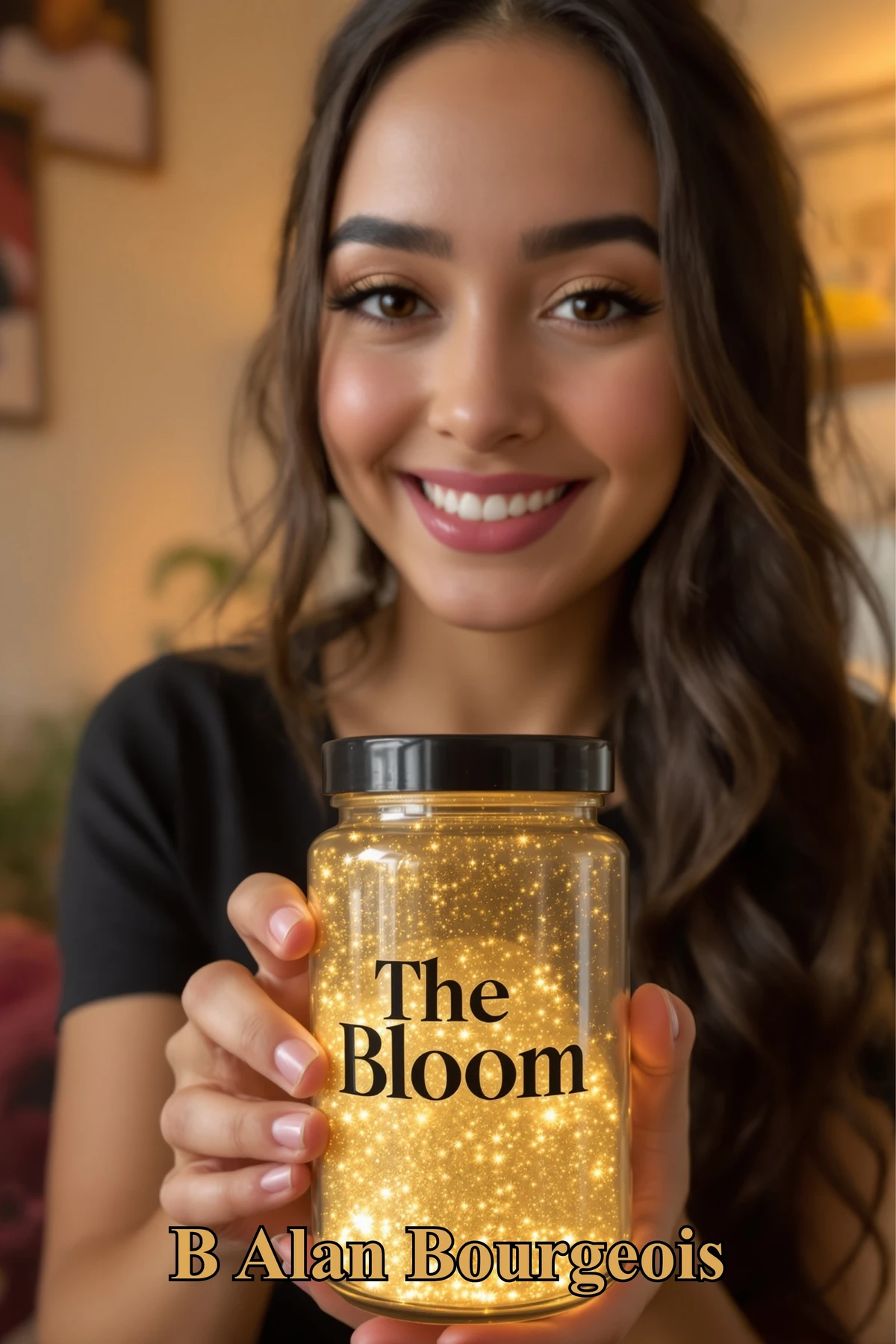
The Bloom
Ready to Read It?
Use the button or the permanent True Voice Review purchase link.
TrueVoiceReview.com/b/bloom Scan to Buy the Book
Quick Take
A tense, socially sharp outbreak thriller where a viral wellness powder turns belief into a vector, forcing a scientist and an influencer to face how fast hope, profit, and panic can rewrite a city.
Short Review
The Bloom is a contemporary outbreak thriller that understands the scariest accelerant isn’t only biology—it’s attention. When a shimmering orange “mycelial” powder goes viral as a cure-all, the story follows three intersecting lanes: Mara Vance, a fungal scientist watching a plausible catastrophe unfold in glamorous packaging; Lena Cruz, a wellness influencer pulled between ethics and rent; and the campus ground-level panic where ingestion becomes a shared-air emergency.
The novel’s early chapters excel at showing how modern crises spread: testimonies become marketing, marketing becomes ritual, ritual becomes distribution. Instead of relying on shadowy lab villains, the book indicts a full ecosystem—platform incentives, institutional caution, profiteering, and ordinary desperation for relief. The prose is cinematic and propulsive, with scene detail sharp enough to make the “viral” feel literal.
This will land best for readers who like near-future, socially aware thrillers that blend dread with cultural critique. Readers looking for lighter escapism—or who are tired of social-media realism—may find the commentary and intensity heavy. But for those who want a smart, unnerving story about how a society can talk itself into danger faster than it can talk itself out, The Bloom is a gripping start.
Full Review
The Bloom opens with a chillingly modern premise: a shimmering orange “mycelial” powder goes viral as a wellness sacrament, and the line between trend and outbreak collapses in real time. The early chapters braid three vantage points—Mara Vance, a fungal researcher trained to distrust spectacle; Lena Cruz, a cash-strapped wellness influencer whose audience equates visibility with truth; and the campus ground level where ingestion turns into a public emergency. The central question isn’t only what is the Bloom—it’s what happens when a potentially biological threat rides the rails of attention, faith, and monetized desperation.
The book’s core situation is built for contemporary dread. “The Bloom” spreads through a feedback loop: testimonies generate demand, demand generates supply, and supply generates more testimonies—until the ritual itself becomes a distribution channel. Rather than treating misinformation as an abstract theme, the narrative makes it tactile: ring lights, discount codes, stitched reaction videos, and the quicksand of “official statements” that arrive slower than virality. In these opening movements, the most frightening idea isn’t a villain in a lab—it’s a culture trained to self-administer risk because the story of salvation feels more livable than the story of caution.
Mara anchors the novel’s ethical weight. She’s not written as a triumphant “science will save us” avatar; she’s exhausted, politically boxed in, and painfully aware that institutions often protect reputations before people. Her expertise adds plausibility without turning the book into a lecture: spore logic, thermal tolerance, aerosol dynamics, and the unnerving possibility that climate pressures have quietly pushed fungi toward new thresholds. The tension around Mara comes from triage—how to communicate hard uncertainty to an audience that reads uncertainty as weakness.
Lena, meanwhile, gives the book its sharpest critique of survival economics. She isn’t portrayed as a cartoon sellout; she’s a person whose rent, family obligations, and algorithmic incentives form a trap. That makes her chapters uncomfortable in the best way. The influencer ecosystem—brand decks disguised as sincerity, managers speaking in conversion metrics, audiences rewarding risk as “authenticity”—becomes a moral machine that grinds without malice. Lena’s arc in the early portion is driven by cognitive dissonance: she wants to be responsible, but she also needs money, belonging, and the intoxicating certainty that followers can manufacture around a shaky experience.
The campus sequence is where the novel’s horror crystallizes. It’s not gore-forward; it’s panic-forward—breath, mist, fluorescent lighting, bodies realizing too late that air is shared. Those scenes are staged with cinematic clarity, and the book is at its best when it lets small details do the work: the TV algorithm flipping from catastrophe to a silly cat video, the paper sign on the lounge door that feels useless, the way people begin to police their own exhalations. The result is an outbreak narrative that feels less like a traditional “patient zero” story and more like a social failure cascade—one that keeps re-seeding itself.
Stylistically, the prose is propulsive and image-rich, with long, urgent paragraphs that mimic doomscroll momentum. The structure—alternating perspectives, escalating public-facing clips, and institutional responses—creates a layered tempo: private dread vs. public performance vs. bureaucratic hedging. The voice stays accessible and serious, aiming for a lit-thriller register rather than pulp, and it’s especially effective at capturing how a “meaning event” can metastasize faster than any fact-check.
The book’s strengths are its immediacy, its moral complexity, and its willingness to implicate everyone: governments that default to reassurance, audiences that reward spectacle, profiteers who move faster than regulators, and ordinary people who simply want relief. It also understands something many outbreak stories miss: controlling a crisis now requires controlling narrative dynamics, not just biology.
Potential limitations are largely taste-based. Readers who want tightly contained, procedural realism may find the social-media density and cultural commentary overwhelming, and the story’s proximity to recent real-world patterns may feel too on-the-nose for those seeking escapism. The opening’s intensity also sets expectations for a relentlessly accelerating plot; readers who prefer slow-burn ambiguity may find the early escalation brisk. Still, for readers drawn to contemporary speculative thrillers—where the monster is as much belief as organism—The Bloom hits with unsettling force.
Pull Quotes
Content Notes
• Language: Mild to moderate (no notable slurs apparent in the excerpt).
• Violence: Moderate (medical crises, seizures/convulsions, death implied; tension-forward rather than graphic).
• Sexual Content: None apparent in the excerpt.
• Drugs/Alcohol: Ingestion of an unregulated psychoactive/supplement-like substance; some drinking references.
• Sensitive Topics: Contagion/outbreak anxiety, death, mass panic, exploitation/profit motives, misinformation, institutional suppression, grief and despair themes.