
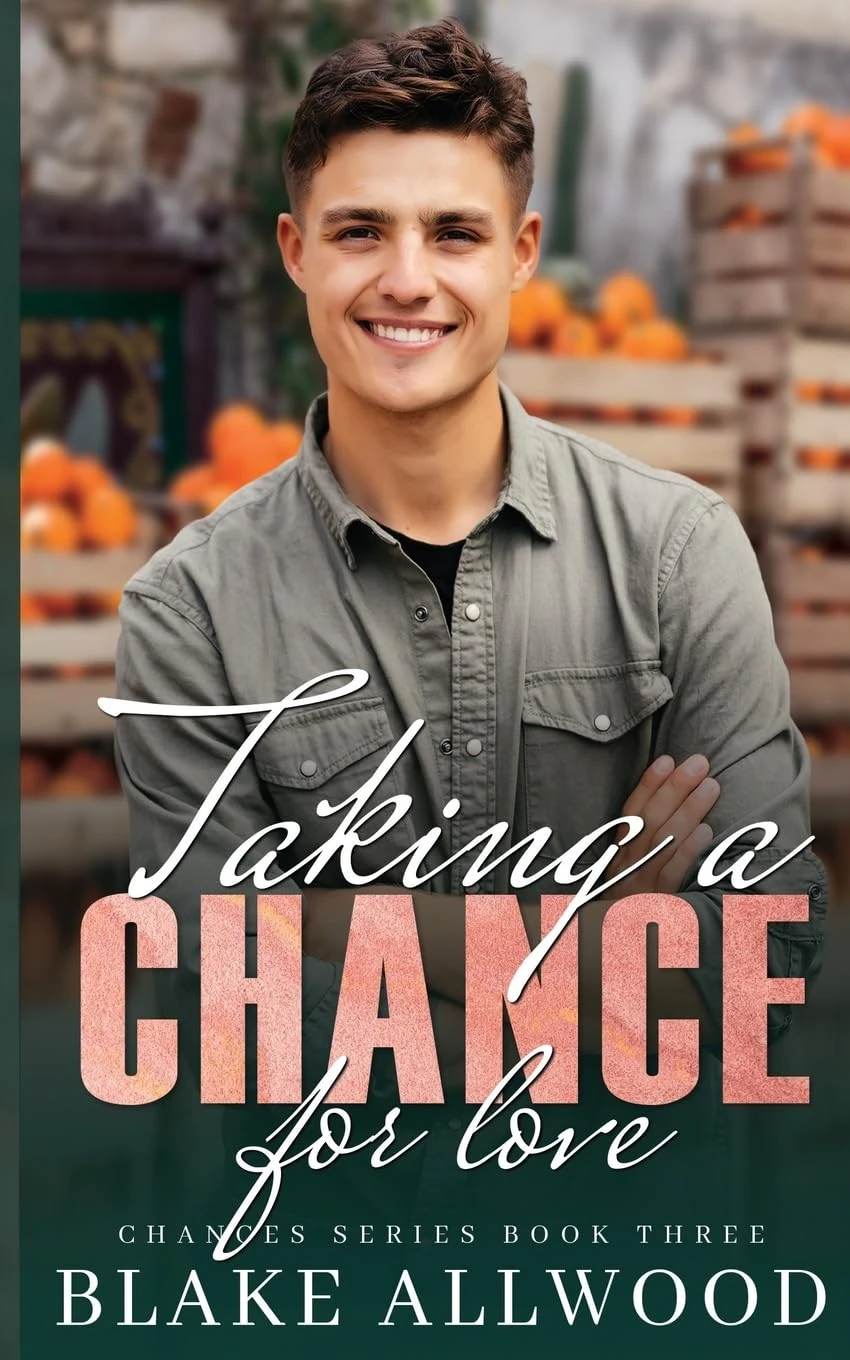
Taking a Chance for Love
Ready to Read It?
Use the button or the permanent True Voice Review purchase link.
TrueVoiceReview.com/b/takingchance Scan to Buy the Book
Quick Take
A warm, emotionally sincere M/M romance, Taking A Chance For Love blends grief, attraction, neurodivergence, and found-family tenderness into a healing-centered love story.
Short Review
Taking A Chance For Love by Blake Allwood is a heartfelt contemporary M/M romance about inheritance, grief, emotional guardedness, and the slow risk of trusting someone new. Joshua Howard arrives in Arizona after his uncle’s death and unexpectedly inherits an orange grove, but the property comes with conditions that force him to remain and work the land. Clay Masters, the grove’s caretaker, is not prepared for a new boss, especially one who disrupts the fragile order he has built after profound loss.
The novel’s greatest strength is its sincerity. Allwood gives both men emotional weight: Joshua’s suspicion and family pain sit beside Clay’s grief, depression, autism, and need for routine. The alternating first-person structure helps readers understand why both characters misread each other and why attraction alone is not enough to make the relationship easy. The grove setting adds warmth and texture, turning the land into a place of memory and healing.
This is an adult romance with explicit sexual content, strong emotional vulnerability, and familiar genre beats. Readers who enjoy hurt/comfort romance, grumpy/sunshine tension, found-family support, and emotionally direct storytelling will likely connect with it. Some may find the pacing slow or the emotional processing repetitive, but the book delivers a compassionate, reader-friendly romance about two men trying to move forward without abandoning what they have lost.
Full Review
Blake Allwood’s Taking A Chance For Love, the third volume in the Chance Series, is a contemporary M/M romance built around grief, inheritance, second chances, and the difficult work of learning how to trust after loss. The setup is familiar in a comforting romance way: Joshua Howard arrives in Arizona for his uncle’s funeral and unexpectedly inherits an orange grove, but the inheritance comes with conditions. He must remain on the grove and work it for a year. The complication is Clay Masters, the grieving caretaker whose life has been shaped by loss, routine, emotional guardedness, and autism.
The novel’s strongest feature is its emotional directness. This is not a romance that hides its heart. Joshua and Clay are both wounded men, and their early interactions carry the defensiveness of people who have learned to expect disappointment. Joshua carries resentment, confusion, and unresolved family pain connected to his uncle and father. Clay, meanwhile, is still living in the shadow of devastating personal losses. The grove becomes more than a setting; it functions as a place of memory, labor, healing, and reluctant intimacy. The orange trees, the Airstream, the small-town community, and the practical work of keeping the property alive give the book a grounded emotional landscape.
Allwood writes in alternating first-person points of view, allowing readers to sit inside both Joshua’s suspicion and Clay’s difficulty processing emotional disruption. This structure works especially well for a romance based heavily on misunderstanding and internal hesitation. Readers are able to see what each man cannot fully communicate to the other, which creates both tension and empathy. Clay’s autism is treated as an important part of his emotional and relational life, not as a decorative trait. His need for routine, his shutdown responses, and his trouble navigating intense feeling are woven into the romance’s central challenge.
The book leans into a classic hurt/comfort rhythm. Much of the story is less about external plot twists than about two men learning how to stop bracing for harm. Readers who enjoy emotionally vulnerable romance, small-town found-family energy, and protagonists who slowly lower their defenses will find a great deal to appreciate here. The supporting characters, particularly the women around the grove community, add warmth and sometimes necessary pressure. They help prevent the story from becoming too enclosed inside Joshua and Clay’s private pain.
The romance itself develops with strong physical attraction from early on, but the emotional connection takes longer to stabilize. That balance gives the book its central pull: desire is obvious, but trust is not. The sexual content is explicit and adult, but it is tied to the characters’ need for safety, control, and mutual understanding rather than existing only as heat. The book is clearly written for adult M/M romance readers comfortable with open sexual language and on-page intimacy.
The limitations are mostly tied to genre expectations and pacing. The story uses several familiar romance devices: inheritance conditions, a grumpy caretaker, unresolved family conflict, emotional miscommunication, and a healing rural/small-town environment. For readers who love these tropes, that familiarity will be part of the appeal. Readers looking for a more surprising plot structure or a faster-moving external conflict may find the middle sections slower and more emotionally repetitive. The novel spends considerable time inside the characters’ processing, especially their fears, assumptions, and grief responses. That introspection supports the emotional arc, though it can occasionally soften the momentum.
The prose is clear, accessible, and conversational. Allwood’s style favors emotional transparency over literary flourish. The result is a reader-friendly romance that prioritizes feeling, vulnerability, and healing. At times, the dialogue and internal narration state emotions plainly rather than allowing every moment to build through subtext, but this also makes the book easy to enter and emotionally straightforward.
As a series entry, Taking A Chance For Love appears accessible enough for readers drawn to this specific premise, though it will likely resonate most with those already comfortable with contemporary gay romance and the Chance Series world. Its appeal is strongest for readers who want tenderness after trauma, a rural work setting, chosen-family support, and a romance between two men who are not simply looking for love but trying to become capable of accepting it.
Overall, Taking A Chance For Love is a warm, adult, emotionally sincere M/M romance with a strong sense of place and a meaningful focus on grief, neurodivergence, and trust. It is not a subtle or especially unconventional novel, but it understands its audience and delivers the kind of healing-centered romance many readers seek: wounded characters, honest desire, hard conversations, and the possibility that love can grow in the places grief left behind.
Pull Quotes
Content Notes
• Language: Moderate to strong language, including explicit sexual language.
• Violence: Mild; references to a car accident and death/loss, but not graphic violence.
• Sexual Content: Explicit adult M/M sexual content on page.
• Drugs/Alcohol: Alcohol use appears, including drinking connected to emotional distress.
• Sensitive Topics: Grief, depression, trauma, family estrangement, death of loved ones, and autism-related emotional processing.