
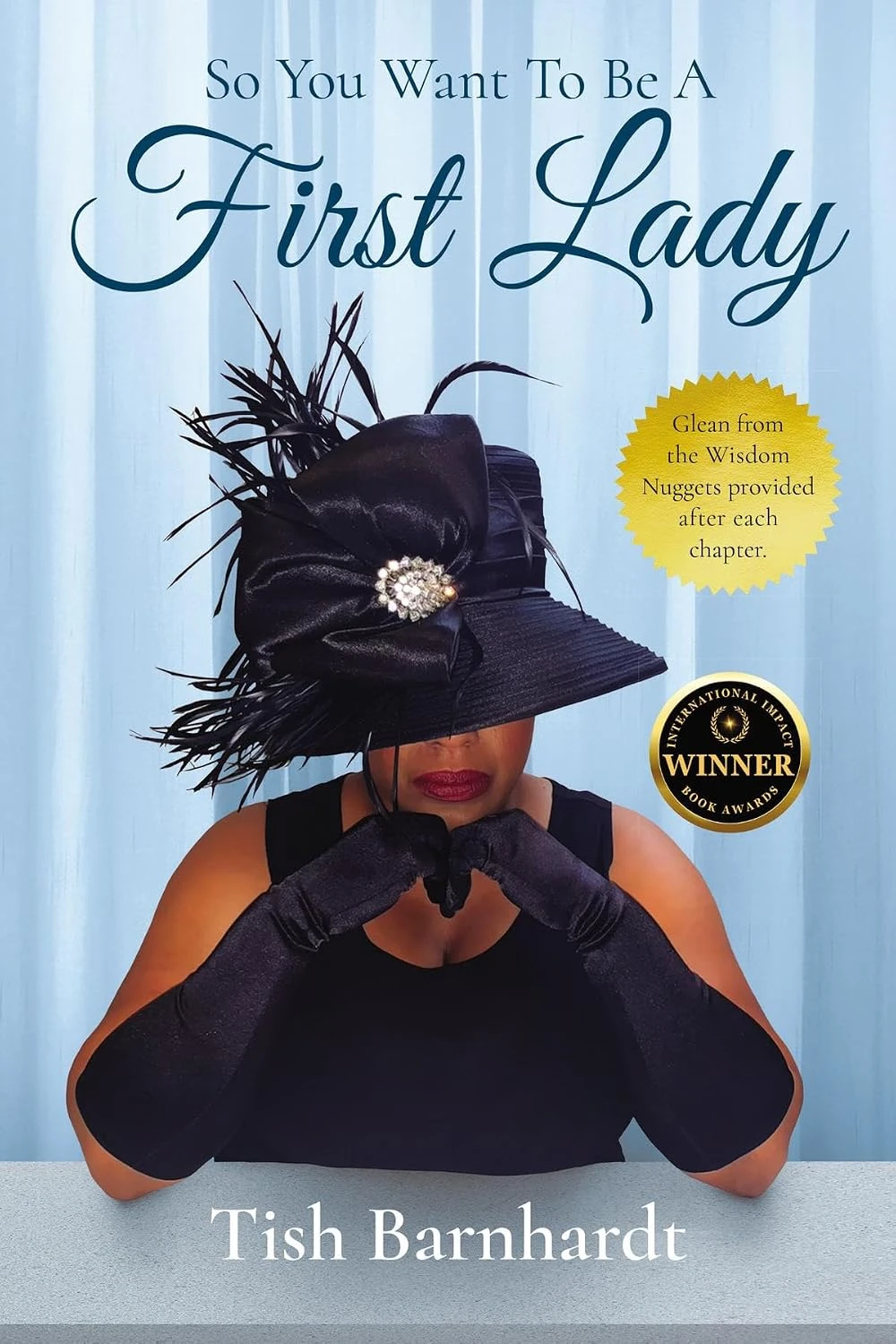
So You Want To Be A First Lady
Quick Take
A candid faith-based drama, So You Want To Be A First Lady? exposes the emotional, financial, and spiritual strain behind church leadership while following one woman’s fight to preserve her voice.
Short Review
Tish Barnhardt’s So You Want To Be A First Lady? explores the private burdens that can exist beneath the public image of church leadership. Through Carol Smith, a pastor’s wife trying to hold together her marriage, family, finances, and ministry role, the novel examines what happens when emotional concerns are dismissed and church boundaries become increasingly blurred.
Carol’s unease begins with the behavior of women in the congregation who seem too familiar with Pastor Leroy Smith. As tension builds, the story widens into a larger portrait of ministry life: unstable church attendance, financial hardship, housing insecurity, marital strain, public expectations, gossip, and the pressure to remain faithful and composed when private life is unraveling.
The book’s strongest feature is its directness. Barnhardt does not romanticize the role of a first lady or treat church leadership as immune from temptation, loneliness, resentment, or betrayal. The recurring “Wisdom Nuggets” following each chapter make the novel part story and part faith-based reflection, offering guidance aimed at pastors, spouses, and church members.
The conversational prose and testimony-like structure will appeal to readers looking for accessible Christian relationship drama with clear spiritual themes. Some may find the repeated conflicts and instructional passages slow the narrative pace, and the story is more message-driven than subtle. Yet its honesty about the emotional and financial sacrifices made by ministry spouses gives it real weight.
This is a solid choice for readers interested in church-centered fiction, marriage struggles, ministry accountability, and stories that confront the realities often hidden behind a polished Sunday image.
Full Review
So You Want To Be A First Lady? is a faith-centered cautionary novel about the unglamorous, often invisible strain carried by women married to pastors. Tish Barnhardt frames the story as fictionalized but emotionally grounded in experiences that can occur behind church doors, where public expectations, private pain, financial instability, and blurred relational boundaries can collide.
The novel follows Carol Smith, known primarily as First Lady, as she attempts to support her husband, Pastor Leroy Smith, their children, and a growing ministry while increasingly questioning what is happening within her marriage. Early tension arises when a younger church member appears overly familiar with Pastor Smith and dismissive toward Carol. What begins as discomfort over phone calls, flirtation, and inappropriate proximity becomes a larger pattern: Carol’s concerns are minimized, boundaries are ignored, and the emotional cost of ministry keeps falling disproportionately on her shoulders.
Barnhardt’s strongest accomplishment is the book’s willingness to name the pressure placed on women in visible ministry roles. Carol is expected to be gracious, forgiving, financially resourceful, spiritually steady, emotionally available, and publicly composed even as her marriage becomes more uncertain. The story understands that the position of “First Lady” can become less a title than a performance—one in which a woman may feel obligated to protect the ministry’s image while carrying private disappointment and fear.
The novel also gives significant attention to financial insecurity. The Smith family’s housing struggles, employment instability, reliance on public assistance, and periods of living in hotels or church spaces add a grounded layer to the story. These elements prevent the book from becoming solely a tale of marital suspicion. It becomes, instead, a portrait of how stress compounds: when money is scarce, ministry demands remain high, church attendance fluctuates, and family responsibilities continue without pause.
The narrative moves in a direct, conversational style that often reads like a testimony shared aloud. Dialogue is plainspoken, emotionally immediate, and rooted in church culture. Barnhardt does not build the book around mystery or literary subtlety; the story is designed to make its concerns visible. The recurring “Wisdom Nuggets” after chapters reinforce that purpose. They shift the book periodically from dramatized fiction into practical spiritual counsel directed toward pastors, first ladies, church members, and women navigating relational boundaries.
That structure will be especially meaningful for readers seeking a faith-based discussion guide or an emotionally accessible story rather than a conventional church drama. The book consistently returns to themes of discernment, accountability, reputation, forgiveness, loyalty, self-worth, and the limits of silence. It asks difficult questions about what happens when a spouse’s concerns are dismissed repeatedly and when church culture protects appearances more effectively than people.
Carol’s emotional endurance is the novel’s central force. Her experience is not presented as a simple story of jealousy or rivalry. Instead, the book traces how suspicion, humiliation, resentment, financial sacrifice, and spiritual obligation can erode trust over time. The later developments surrounding health concerns, marital separation, and the exposure of long-standing pain increase the emotional stakes without requiring the reader to treat Carol as flawless. She is wounded, frustrated, sometimes bitter, but recognizably human.
Some readers may struggle with the book’s repetition. Similar conflicts recur through multiple church members and situations, and the narrative’s emphasis on lessons can occasionally interrupt momentum. The point of view remains closely tied to Carol’s interpretation of events, which gives the novel urgency but leaves limited room for ambiguity or wider psychological complexity among supporting characters. Readers seeking highly polished literary fiction, nuanced ensemble characterization, or a tightly compressed plot may find the book’s approach more didactic than subtle.
Still, that directness is part of the book’s identity. Barnhardt is writing toward readers who may have lived through comparable situations or witnessed them within church communities. For that audience, the novel’s bluntness may feel less like overstatement and more like recognition. The book’s clearest message is that faith does not require women to ignore warning signs, minimize emotional harm, or disappear beneath a ministry role.
So You Want To Be A First Lady? is ultimately a serious, compassionate faith-based relationship drama about the cost of public ministry and the private resilience required to survive it. It will resonate most strongly with first ladies, pastors’ spouses, church leaders, women in ministry, and readers drawn to testimony-style Christian fiction that addresses marriage, betrayal, boundaries, and restoration without pretending that faith communities are free from human failure.
Pull Quotes
Content Notes
• Language: Mild; occasional heated arguments and informal slang.
• Violence: Mild to moderate; includes a threatening knife incident and emotional confrontation, without graphic violence.
• Sexual Content: Implied infidelity, sexual boundary concerns, discussion of sexual acts, and a sexually transmitted infection; no explicit on-page sex scenes.
• Drugs/Alcohol: Minimal; no significant drug or alcohol use.
• Sensitive Topics: Marital conflict, suspected infidelity, emotional neglect, financial hardship, housing insecurity, public humiliation, divorce, self-harm threat, sexual health concerns, and church-related trauma.