
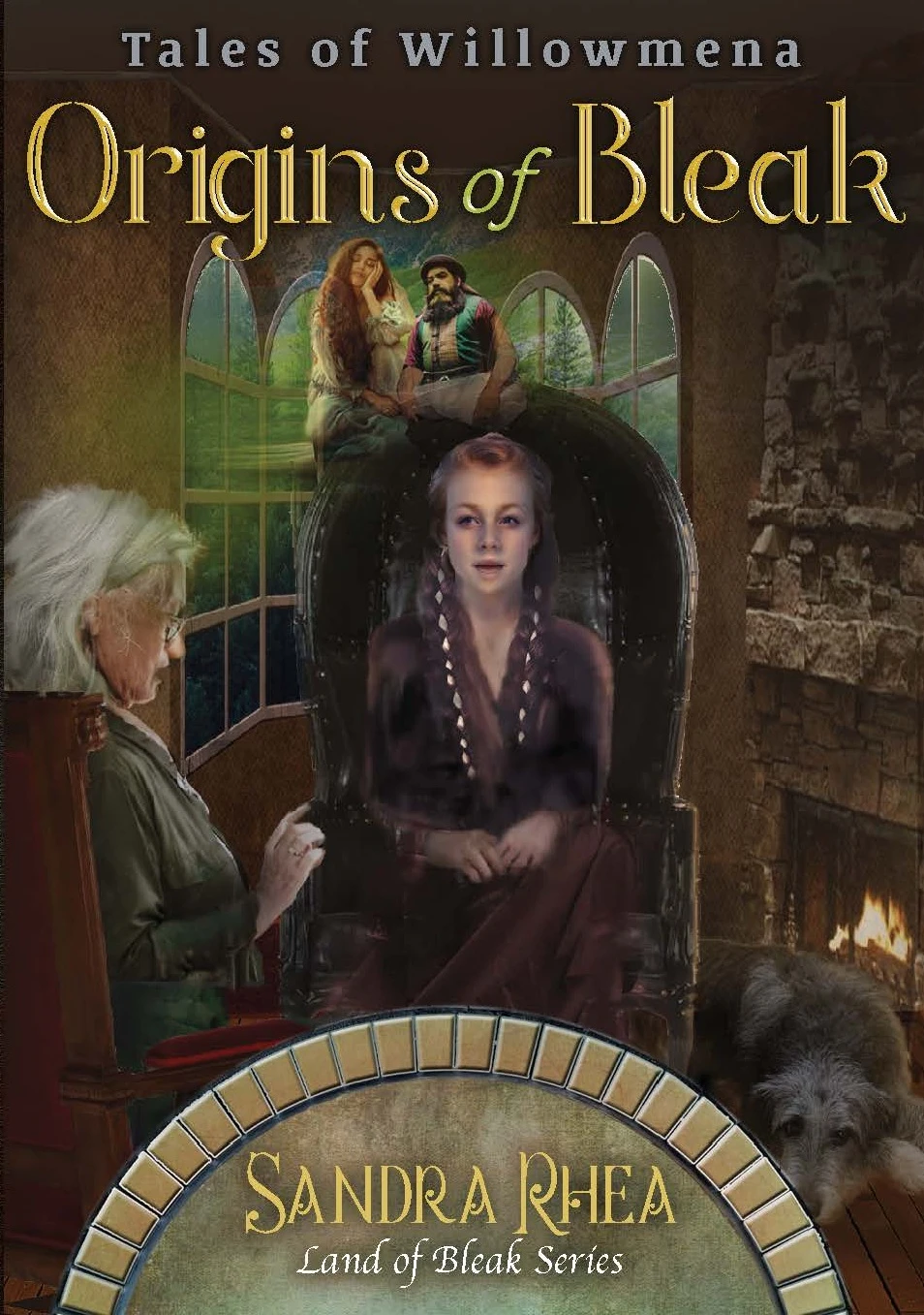
Origins of Bleak
Ready to Read It?
Use the button or the permanent True Voice Review purchase link.
TrueVoiceReview.com/b/originsbleak Scan to Buy the Book
Quick Take
A lore-forward fantasy installment that trades the rush of quest for the power of revelation, as Willowmena’s godmother unveils an ancestral secret rooted in a world split that still shapes everything.
Short Review
Origins of Bleak shifts the series from outward questing to inward discovery, placing Willowmena—“the Girl With the Pure Heart”—in a quiet cottage where her mysterious godmother Olivia finally reveals the truth about Willowmena’s beginnings. The story promises a layered structure: a warm, present-day frame gives way to a mythic past when the Land of Bleak and the Land Outside were once united before a violent split tore them apart. From there, the focus turns to ancestry and consequence, tracing how Willowmena’s forebears “grew up, fought, loved,” and guarded dark secrets that now threaten to reshape everything Willowmena believes about her world.
This installment is positioned as lore-rich fantasy, appealing to readers who love origin myths, hidden histories, and the slow click of revelation that recontextualizes a hero’s journey. The thematic spine—identity, inheritance, and the moral complexity of secrets kept for protection—gives the book emotional weight without advertising graphic intensity. Readers seeking nonstop action may find an origins volume more reflective by nature, and the premise strongly suggests it will land best for those already invested in Willowmena’s ongoing arc. For series readers, though, it offers the satisfying promise of depth: a world with a wound at its center, and a heroine finally learning why that wound exists.
Full Review
Origins of Bleak returns to Willowmena after the apparent triumph of her earlier journey: she has survived the Land of Bleak, fulfilled prophecy, and now lives in a “cozy cottage in Land Outside.” The core situation shifts from quest momentum to revelation, using a classic frame narrative: Willowmena’s mysterious godmother, Olivia, finally sits down to tell the story of Willowmena’s origins. From that intimate setup, the book opens outward into mythic history—an era when the Land of Bleak and the Land Outside were once a single world, before a violent split severed them permanently. The promise is clear: the adventure here is not about reaching a destination, but about discovering what was hidden, why it was hidden, and what it will cost once it can no longer stay buried.
The protagonist remains Willowmena—identified as “the Girl With the Pure Heart,” a title that positions her as a moral center in a world shaped by secrets and division. Yet the narrative’s engine is Olivia’s voice and the ancestral past she unveils. That choice is one of the book’s most appealing hooks: rather than merely extending danger forward, it digs backward, turning history into suspense. The framing suggests a warm, sheltered present (a cottage, a host-guest conversation) contrasted against a harsher, more volatile origin story where ancestors “grew up, fought, loved and protected dark secrets.” This layered structure offers two kinds of tension at once: the emotional tension of a young hero learning who she is, and the larger, mythic tension of a world whose foundational fracture still shapes everything that follows.
Tonally, the material reads as family-friendly fantasy with a shadowed edge. Words like “Bleak,” “violent split,” and “dark secrets” signal stakes beyond whimsy, but the emphasis on lineage, love, and protection suggests the darkness is handled through mythic implication rather than grim detail. The themes orbit identity, inheritance, and the ethics of concealment: what previous generations did to protect their world, what they chose not to say, and what happens when the next generation must live with the consequences. There is also an implicit political/fable layer—two lands divided “forever,” born from violence, carries echoes of how communities fracture and how narratives get preserved (or manipulated) on each side of a boundary.
In terms of style and pacing expectations, a “story within a story” often leans more reflective and explanatory than a straight quest plot. That can be a strength for readers who love lore, genealogy, and the feeling that a fantasy world has deep roots. If the series has already earned investment in Willowmena, an origins volume can feel like a reward: it turns familiar names and places into meaningful history and reframes earlier events with new context. The cottage conversation is also an inviting gateway for younger readers—an emotionally safe place from which to explore difficult truths.
At the same time, the same structural choice can be a limitation for some audiences. Readers coming in craving constant forward action may find an origins-focused installment more patient and exposition-driven by design. Additionally, a volume that explicitly follows earlier books (“survived…fulfilled the prophecy”) is likely to work best for readers already attached to the series’ central arc; newcomers may sense they are stepping into a continuing conversation. None of that diminishes the concept—it simply clarifies the book’s most natural home on the shelf: a series installment that deepens the mythology and raises the emotional stakes by tying the present to a buried past.
The book’s biggest draw is its promise of consequential revelation: secrets “once revealed, will change Willowmena’s world forever.” That is the right kind of promise for middle-grade and all-ages fantasy: it respects young readers’ appetite for serious truths without assuming they need shock to stay engaged. If the narrative delivers on the interplay between personal identity (Willowmena’s origins), relational intimacy (Olivia’s role as godmother and storyteller), and mythic history (the world split and ancestral choices), Origins of Bleak has the potential to feel both comforting and urgent—the sort of book where the safest room in the story still contains the most dangerous knowledge.
Pull Quotes
Content Notes
• Language: none to mild.
• Violence: mild to moderate, largely implied (world-splitting conflict, “violent split,” ancestral fighting).
• Sexual Content: none indicated.
• Drugs/Alcohol: none indicated.
• Sensitive Topics: separation/division, family secrets, implied conflict/trauma in ancestral history.