
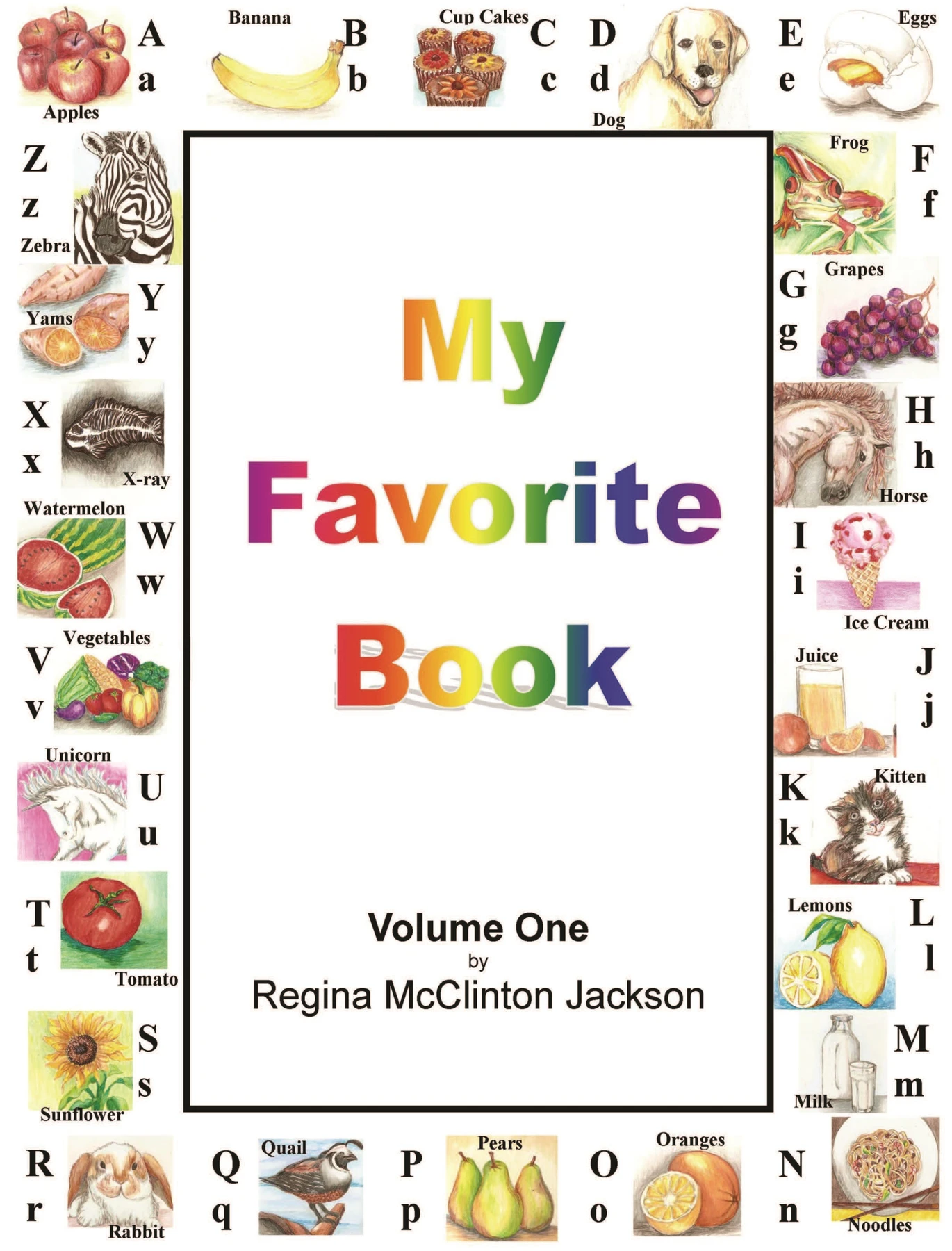
My Favorite Book
Quick Take
A personalized preschool scrapbook that builds early learning through photo-driven engagement, pairing affirming “about me” statements with bold number-and-color recognition pages and caregiver-friendly learning extras.
Short Review
My Favorite Book, Volume One is a customizable preschool scrapbook that turns a child into the “main character” of their own early-learning book. Built around photo prompts and simple, affirming statements, it encourages young kids to engage with reading because the pages reflect their real life—learning, playing, family time, and growing independence.
The book’s most consistent learning structure pairs numbers (1–20) with bold color-block pages, reinforcing recognition through repetition and strong visual cues. It also includes practical additions for caregivers, including a brief handwashing routine in Appendix A and basic punctuation definitions in Appendix B for later learning conversations.
This is not a narrative storybook; it’s a guided keepsake project. The experience works best for families or classrooms willing to print it, add photos, and use the pages as conversation starters. For the right audience—caregivers who want an interactive, personalized literacy tool—it’s a meaningful concept that doubles as a memory book.
Full Review
My Favorite Book, Volume One by Regina McClinton Jackson is less a traditional “storybook” and more a guided, build-it-yourself keepsake designed to make a preschooler the star of their own early-learning book. The core premise is simple and smart: young children are more motivated to “read” (or be read to) when the pages reflect them—their face, their routines, their growing independence, and the everyday moments that define early childhood. As a result, this book functions as both a literacy tool and a memory project, intended for a parent, grandparent, or caregiver to assemble over time with photos.
The structure leans heavily into repetition and recognition—two pillars of preschool learning. Each page pairs a bold, child-centered statement with a prompt to add a photo (“place a photo…”), reinforcing the idea that learning is happening constantly through play, exploration, routines, and family life. That repetitiveness, which can feel monotonous to an adult flipping through, is actually part of the design’s usefulness for its intended audience: preschoolers thrive on predictable patterns and familiar phrasing. It also creates a consistent “rhythm” for read-aloud time, where the adult can pause to talk about the photo, ask questions, and reinforce vocabulary.
A clear educational backbone runs underneath the scrapbook concept. The book is built to support recognition skills—especially numbers (1–20) and colors—through highly visual, color-block pages that highlight the number and its written form. The crayon motif and bold backgrounds are direct and easy to decode, and the child can quickly learn to associate the page color, number, and repeated format. In a home or classroom setting, it’s easy to imagine a child anticipating what comes next: the next number, the next color, the next “about me” moment.
The tone is upbeat and affirming, frequently framing the child as capable, growing, and learning in many ways. Pages about play, learning, family, and personal growth present a gentle, supportive worldview—one that naturally invites conversation about feelings, goals, and everyday habits. Notably, the book also includes a practical, caregiver-facing element in Appendix A: a short, straightforward handwashing routine that turns hygiene into a repeatable, kid-friendly practice by pairing it with a familiar song. That inclusion signals the author’s broader intent: not just literacy, but healthy early-childhood routines that support development and wellbeing.
Appendix B shifts into a more formal reference mode, providing brief definitions of common punctuation marks. For a true preschool audience, this is clearly “for the grown-up,” but it aligns with the book’s wider philosophy—turning the book into a guided learning environment where the adult can explain concepts as the child develops. In that sense, My Favorite Book tries to be more than a scrapbook: it’s a staged learning tool meant to grow with the child over repeated readings.
The biggest strength here is the personalization engine. Many children’s learning tools are generic by necessity; this one becomes uniquely meaningful once completed. For families who value tangible keepsakes—or for grandparents who want a purposeful gift that doubles as a project—this format has real appeal. It also lends itself well to early childhood programs where teachers can create individualized “books” as part of classroom identity and literacy development, especially when paired with simple activities around colors, counting, and daily routines.
Some limitations are worth noting so readers buy it for what it is. This is not narrative-driven, so children who want characters, plot, or imaginative story arcs won’t find that here. Engagement depends on the adult’s willingness to assemble the book and to use the photo prompts actively; without that participation, many pages will read like minimal statements on color backgrounds. The design is functional rather than modern, and the formatting choices (including spacing and occasional long phrasing) can feel more adult-facing than preschool-tight. The physical instructions (such as using heavy tape for photos) also make the book’s ideal experience clearly print-based and hands-on—less suited to readers looking for a purely digital, ready-to-go children’s book.
Taken on its own terms, though, My Favorite Book, Volume One delivers a warm, practical concept: a customizable early-learning scrapbook that encourages preschoolers to recognize numbers and colors while building pride in self, family, and growth. It’s best approached as a guided project—part literacy support, part family memory book—rather than a conventional children’s read-aloud.
Pull Quotes
Content Notes
• Language: none/mild (kid-friendly)
• Violence: none
• Sexual Content: none
• Drugs/Alcohol: none
• Sensitive Topics: none notable; includes hygiene guidance (handwashing)