
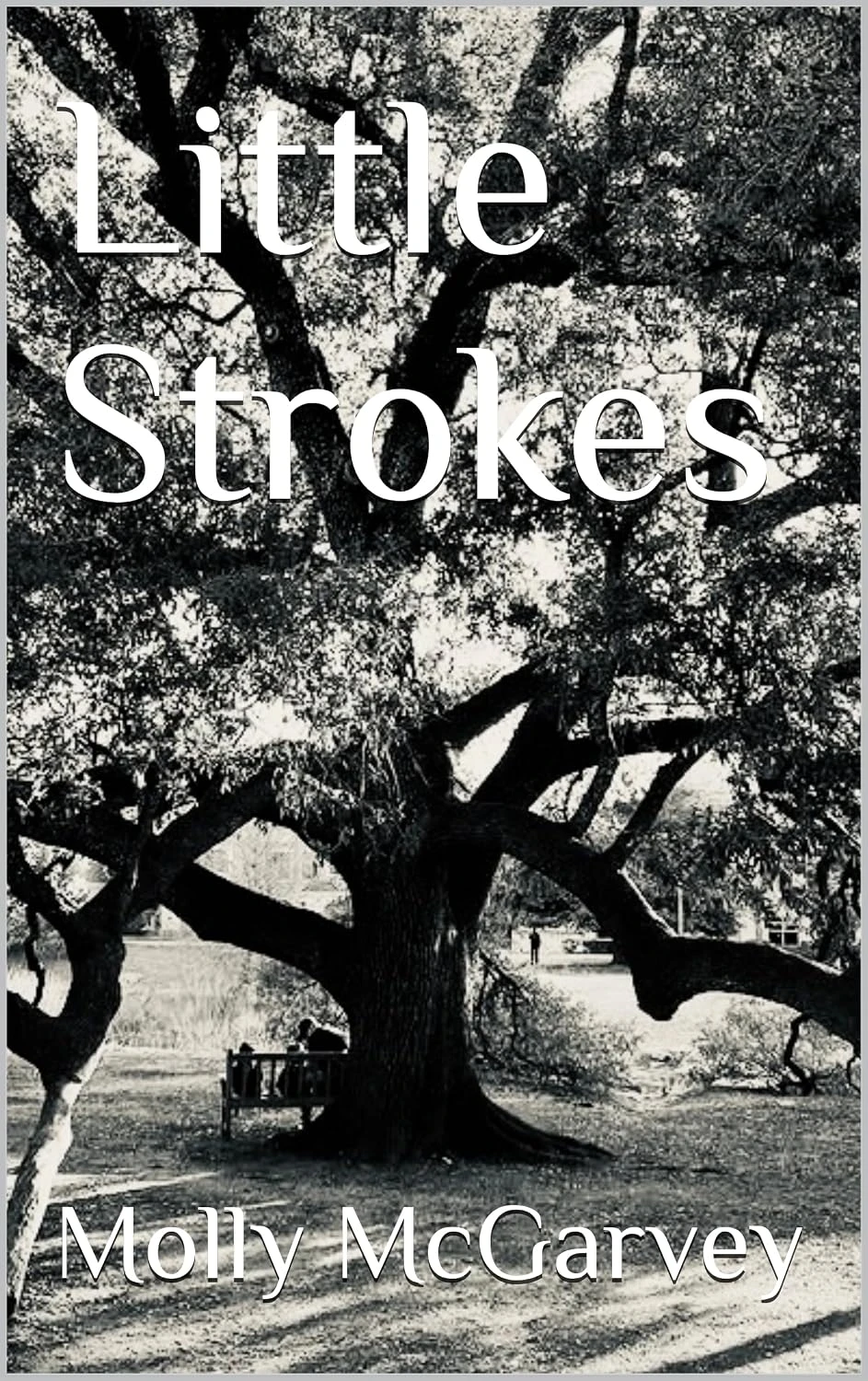
Little Strokes: The Erasure of Austin’s
Quick Take
The novel’s most powerful witnesses are its ordinary objects—quilts, recipes, photographs, journals, and buildings that refuse to remain silent. Wheatville feels inhabited rather than merely researched.
Short Review
Little Strokes: The Erasure of Austin’s Wheatville Freedom Colony is a sweeping historical novel about four generations of Black women whose family history becomes inseparable from the creation and destruction of one of Austin’s freedom colonies.
Beginning with Addie and Polly under slavery, the novel follows Polly, Katie, Lizzie, and Carla as they preserve family identity through quilting, cooking, spiritual practice, education, music, photographs, journals, and oral history. Wheatville emerges not as a historical footnote but as a living community of farms, churches, classrooms, businesses, gardens, and neighbors. Its disappearance unfolds gradually through racist neglect, environmental injustice, segregation, development, rising taxes, institutional displacement, and selective preservation.
The novel’s greatest strengths are its sensory detail, extensive historical grounding, and use of ordinary objects as vessels of memory. An embroidered dress, a carved cane, family records, and surviving buildings become evidence against official histories that overlook the people who lived there.
Its considerable length and documentary approach may challenge readers seeking a tightly paced, plot-driven novel. Historical explanation, civic policy, and speeches sometimes take precedence over character movement. However, readers drawn to expansive family sagas and place-based historical fiction will find substantial emotional and educational value.
Painful yet purposeful, Little Strokes argues that communities can be erased physically while surviving through the people determined to remember them.
Full Review
Little Strokes: The Erasure of Austin’s Wheatville Freedom Colony is an ambitious work of multigenerational historical fiction that restores a nearly vanished Black community by tracing one family’s struggle to create, preserve, and remember a place of its own.
The novel begins before emancipation with Addie and her young daughter Polly, enslaved on an Arkansas plantation. In a moonlit hush arbor, African spiritual traditions, Catholic imagery, music, dance, and communal worship become instruments of survival. This opening establishes the book’s central idea: people denied control over their bodies, labor, land, and recorded history can still preserve identity through ritual, memory, storytelling, and objects passed from one generation to another.
Polly’s early life is marked by brutal exploitation, including sexual violence committed against her as a child. Yet the novel refuses to define her solely through victimization. She becomes a gifted quiltmaker whose hidden designs record people, animals, domestic spaces, and memories that official history would never value. Her daughter Katie inherits a related responsibility—not simply to survive, but to carry forward the images, practices, recipes, prayers, and stories that connect the family to its past. A dress embroidered on the inside becomes one of the book’s most effective symbols: history preserved privately because the public world has no interest in protecting it. Katie later explains that the concealed pictures “saved” her, linking art directly to emotional survival and cultural continuity.
From Polly, the narrative passes to Katie, then Lizzie, and finally Carla. The four-part structure gives each woman a distinct historical period while allowing family habits, griefs, and unfinished questions to echo across generations. The family’s story gradually expands into the history of Wheatville, the Austin freedom colony associated with formerly enslaved landowner James Wheat. Farms, cookhouses, churches, schools, music, newspapers, gardens, and shared labor give the community texture beyond its historical significance. Wheatville feels inhabited rather than merely researched.
The novel is particularly strong when history appears through ordinary experience. Institutional racism is not confined to courtroom speeches or dramatic confrontations. It appears in garbage wagons passing through Wheatville without collecting residents’ trash, a city dump spreading disease near a Black school, children walking past institutions that exclude them, and public improvements arriving only after displacement becomes politically useful. The community’s erasure occurs through accumulated decisions—neglect, sanitation policy, segregation, development, taxation, renaming, demolition, and selective preservation. The title’s “little strokes” therefore carries several meanings: the incremental building of a family and community, the repeated blows used to destroy them, and the small acts of remembrance that resist disappearance.
McGarvey’s prose is most compelling when grounded in sensory detail. Kitchens, gardens, quilts, trees, clothing, food, music, and Austin’s heat create a strong physical world. The narrative also draws power from recurring objects: the embroidered dress, the carved cane, family photographs, journals, deeds, recipes, and buildings that survive in altered form. These objects function as witnesses when written records are incomplete, misleading, or hostile.
The book’s scale is both its distinction and its principal limitation. At nearly six hundred pages, it contains enough history, characters, civic developments, and cultural detail for several novels. Some readers will appreciate its expansive, archival quality; others may find the pace slow and the accumulation of names, institutions, dates, speeches, and historical explanations demanding. At times, characters momentarily recede while the narrative delivers information that reads more like a documentary record. The final sections become especially direct in their engagement with urban renewal, school displacement, historic preservation, and gentrification. This strengthens the novel’s public argument but occasionally reduces the subtlety found in its intimate family scenes.
The emotional reward comes from seeing how personal memory and civic history converge. Carla, the fourth-generation descendant, begins researching the gaps in public records and discovers that official documentation can preserve facts while still losing human truth. Census entries, prison records, photographs, maps, and newspaper fragments cannot fully explain the people whose lives they summarize. Her work becomes an attempt to assemble private memory and public evidence into a history that can no longer be ignored. The novel’s eventual image of papers, photographs, books, deeds, quilts, and inherited objects being treated as disposable delivers its argument with devastating clarity: cultural erasure does not always look like deliberate destruction. Sometimes it looks like someone deciding that another family’s history has no resale value.
Little Strokes is best suited to patient readers of sweeping historical fiction, Texas history, Black family sagas, and novels about land, memory, displacement, and cultural survival. It is painful, deeply researched, occasionally unwieldy, and ultimately difficult to dismiss. Its strongest achievement is making a vanished community feel not only real, but wrongfully absent.
Pull Quotes
Content Notes
Language: Moderate; occasional strong profanity and historically accurate racial slurs, including the N-word.
Violence: Moderate; slavery-related brutality, child abuse, sexual assault, racist intimidation, references to lynching, murder, shootings, illness, and death. Most violence is not graphically described.
Sexual Content: A child is sexually assaulted in a brief but disturbing on-page passage; pregnancy resulting from the assault is discussed. Other sexual material is limited and generally non-graphic.
Drugs/Alcohol: Recurring alcohol and tobacco use; references to intoxication, bootlegging, bars, and underage drinking.
Sensitive Topics: Slavery, child sexual assault, racism, segregation, racial slurs, infant and child death, miscarriage or stillbirth, disease, poverty, environmental injustice, displacement, police brutality, grief, cancer, and gentrification.