
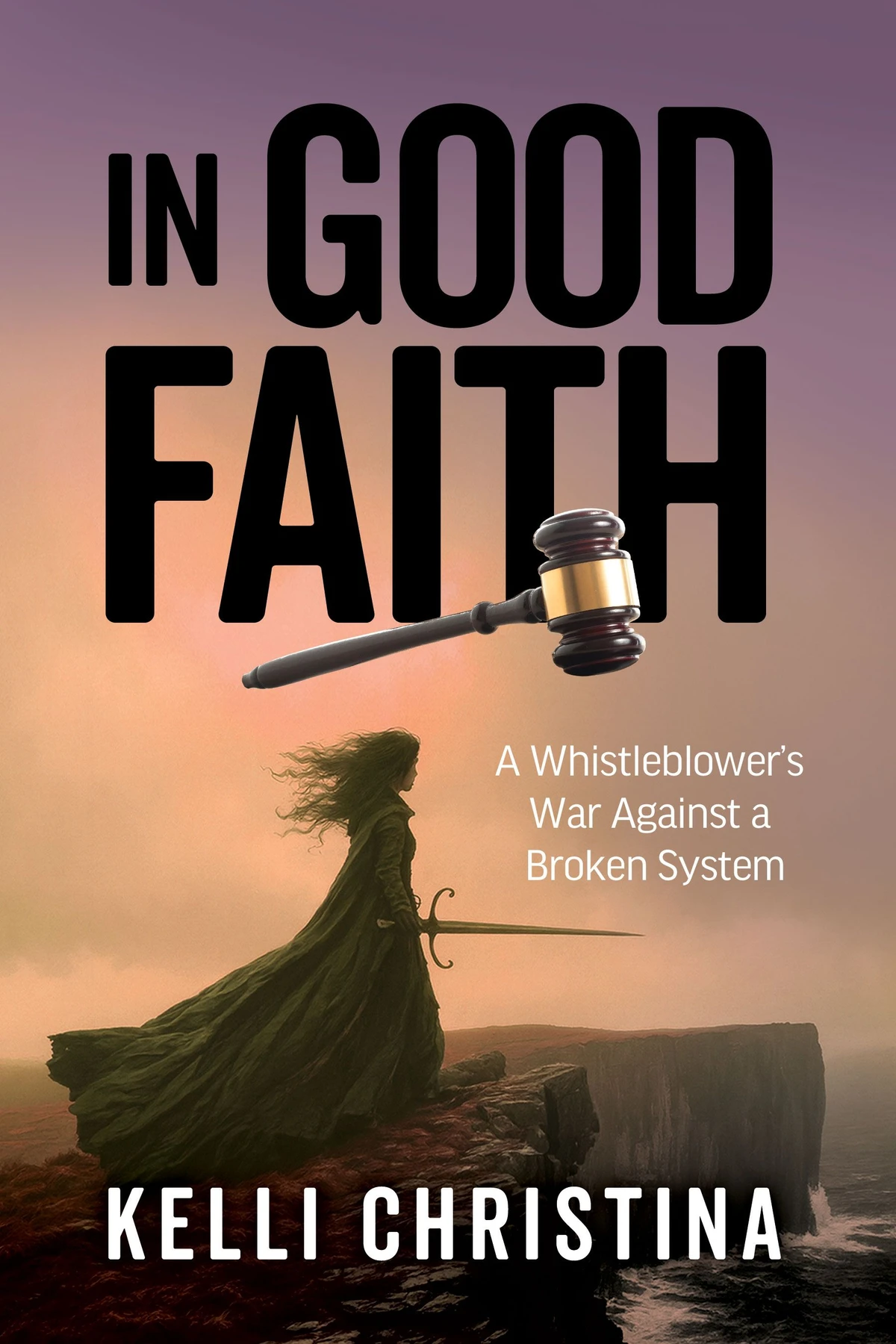
In Good Faith
Ready to Read It?
Use the button or the permanent True Voice Review purchase link.
TrueVoiceReview.com/b/goodfaith Scan to Buy the Book
Quick Take
A raw, determined whistleblower memoir about business ethics, legal frustration, financial ruin, and one woman’s refusal to let a broken system have the final word.
Short Review
In Good Faith: A Whistleblower’s War Against a Broken System is a forceful narrative nonfiction account of Katheryn Lane’s years-long fight after workplace lawsuits, withheld commissions, alleged industry fraud, and government frustration upend her life. The book frames itself as a real-life story told through a fictionalized protagonist, with names and identifying details changed, giving it the feel of both memoir and legal-business drama.
The strongest parts of the book come from its emotional urgency. Katheryn is not portrayed as a passive victim; she is a driven entrepreneur and recruiter who keeps pushing through financial crisis, legal confusion, personal upheaval, and bureaucratic resistance. The opening FBI scene gives the story immediate tension, while the chapters that follow build a portrait of a woman whose professional ethics collide with a system that does not easily reward honesty.
The book’s limitations are tied to its scope. It covers workplace scandal, lawsuits, romance, health, politics, faith, rebuilding, and government outreach, which gives the story breadth but sometimes slows the pace. Readers looking for a concise investigative account may find it highly personal and dense. Readers who appreciate survivor-driven nonfiction, whistleblower stories, and business ethics narratives will find a raw and determined account of resilience.
Full Review
In Good Faith: A Whistleblower’s War Against a Broken System is a driven, personal, and often intense narrative nonfiction account of Katheryn Lane’s fight after a successful career in medical staffing collapses into lawsuits, financial devastation, alleged fraud, government frustration, and years of persistence. The book identifies itself as narrative nonfiction based on real-life events, with names, identifying details, and some dialogue fictionalized for privacy and story flow. That framing matters because the book reads less like detached investigative reporting and more like a survivor’s testimony shaped into a legal-business memoir.
The opening sets the tone quickly. Katheryn arrives at a Washington, DC police precinct demanding FBI assistance after believing she may be followed while attempting to bring evidence about the medical staffing industry to people in power. From there, the book moves backward into her professional beginnings, her entrepreneurial drive, the founding of KDC Top Medical Staffing, her relationships, and the workplace situation that leads to her becoming a whistleblower. The early chapters are full of momentum: ambition, glamour, friendship, office politics, financial pressure, and the first signs that loyalty inside a business can collapse when legal exposure enters the room.
At its strongest, In Good Faith captures the human cost of systems that appear orderly from the outside but become brutal once a person is caught inside them. The book is not only about medical staffing or employment law; it is about what happens when a person believes she has done the ethical thing and then discovers that ethics do not always pay rent, protect commissions, preserve friendships, or guarantee justice. Katheryn’s loss of income, her efforts to recover money she believes she earned, and her ongoing contact with attorneys, government offices, and law enforcement give the book its engine. The story’s central question is not simply “Was she right?” but “How long can one person keep fighting after the system teaches her that being right may not be enough?”
The book’s voice is direct, emotional, and unapologetically personal. It does not pretend to be neutral about Katheryn’s experience. That is both a strength and a limitation. Readers who want a polished, emotionally restrained legal narrative may find the tone heated in places, especially when the book moves through government negligence, political figures, workplace betrayals, and romantic complications. Readers who respond to memoirs about survival, whistleblowing, and institutional frustration, however, will likely find that intensity part of the appeal. The book feels lived-in rather than sanitized.
The structure is broad and episodic, moving through business history, lawsuits, financial hardship, health struggles, travel, relationships, rebuilding, government outreach, and supporting appendices. The table of contents alone signals the range, moving from “FBI Interrogation” and “The Lawsuits” to “Whistleblower in Danger,” “Miracles & Dreams,” and “The Trump Book.” This gives the book a large personal canvas, but it also means the reader must be willing to follow many threads. Some sections feel more like case documentation or personal record than tightly compressed narrative nonfiction. For readers invested in the whistleblower journey, that density may add credibility. For readers seeking a lean legal thriller pace, it may feel overstuffed.
Katheryn herself is the book’s undeniable center. She is ambitious, reactive, wounded, determined, socially connected, and often larger than life. The book does not present her as a quiet victim. It presents her as a woman who pushes, argues, documents, calls, travels, rebuilds, and keeps demanding recognition long after many people would stop. That persistence gives the story its power. The later material, including her creation of a large litigation book and continued advocacy for fairer staffing-industry laws, broadens the memoir from personal grievance into a call for reform.
In Good Faith will work best for readers drawn to whistleblower memoirs, business ethics, workplace scandal, legal battles, and stories about women refusing to be erased by systems built to outlast them. It is not a neutral industry study, and it is not a quiet memoir. It is a raw, forceful account of one woman trying to turn personal ruin into public warning. The result is compelling, uneven at times, but undeniably gripping.
Pull Quotes
Content Notes
• Language: Mild to moderate; no dominant pattern of strong profanity noted.
• Violence: Mild; includes references to physical fights, fear of being followed, threats, and personal danger, but no graphic violence.
• Sexual Content: Moderate thematic content involving workplace affairs, sexual harassment allegations, dating, and adult relationships; not explicit.
• Drugs/Alcohol: References to meth possession, medication, antidepressants, Valium, bars, cocktails, and recovery/Al-Anon themes.
• Sensitive Topics: Workplace harassment, financial ruin, unemployment, alleged fraud, legal battles, medical stress, panic attacks, possible stalking, homelessness risk, and institutional betrayal.