
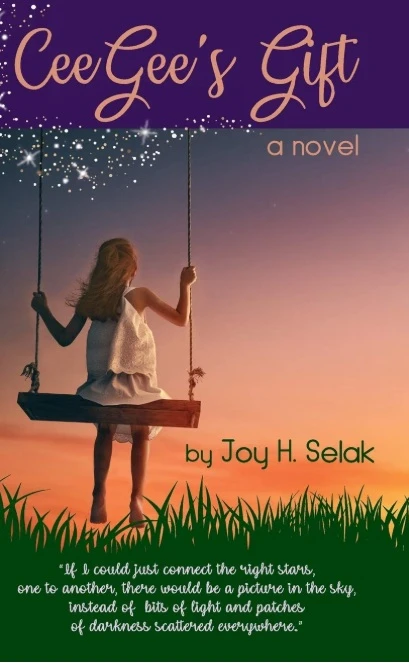
CeeGee’s Gift
Ready to Read It?
Use the button or the permanent True Voice Review purchase link.
TrueVoiceReview.com/b/ceegeesgift Scan to Buy the Book
Quick Take
A tender, character-driven island novel about a girl whose unsettling “Knowings” of others’ futures become, with the help of an old friend, a hard-won gift she learns to give in service of love, dignity, and community.
Short Review
Set on a small Texas Gulf island, CeeGee’s Gift follows almost-thirteen-year-old Celia Gene “CeeGee” Williamson, a tall, awkward girl with a secret: a mysterious “Knowing” that tells her things about other people’s futures, especially around death. After a community-service gardening project connects her with widower Mr. Tindale, CeeGee’s buried gift reawakens, drawing her into the lives of a struggling carpenter, a family facing illness, and an entire town quietly shaped by loss and love.
The novel unfolds through conversations, small acts of service, and richly drawn scenes of island life—ferry crossings, souvenir “Tacky Stores,” the marsh and jetty—rather than through big plot twists. Its heart lies in the intergenerational friendship between CeeGee and Mr. Tindale, who helps her see that her ability is not a curse meant for her, but “a gift to give” in the service of others. That insight leads to “CeeGee’s Guide for Giving,” a simple, resonant set of principles about discovering one’s gifts, refusing to judge, and looking for “silver linings” in hard times.
Readers should expect honest engagement with death, grief, and financial struggle, handled with sensitivity and without graphic detail. CeeGee’s Gift will particularly suit middle-grade and early-teen readers (and adults) who appreciate character-driven stories, gentle magical realism, and novels that tackle big themes—mortality, purpose, generosity—with warmth rather than sentimentality.
Full Review
CeeGee’s Gift is a warm, quietly luminous middle-grade/young-teen novel set on Magdalena Island, a small Texas Gulf Coast community where hurricanes, ferries, souvenir “Tacky Stores,” and a tight-knit town form the backdrop for one girl’s coming-of-age with an unusual spiritual gift. Celia Gene “CeeGee” Williamson is almost thirteen: tall, freckled, awkward, and more comfortable with books and questions than with kids her own age. She also carries a secret she has been trying to bury for three years—a mysterious “Knowing” that comes as a beam of light and tells her things about other people’s futures, especially around illness and death.
When a seventh-grade community service assignment sends CeeGee to help elderly widower Mr. Tindale clean up his neglected garden, she stumbles into the first test of that buried gift. In a moment of unguarded honesty, she blurts out that his “time is real short,” triggering anger, fear, and a week of dread as she scours the obituaries and listens for sirens, convinced she has set another tragedy in motion. Instead, she finds Mr. Tindale strutting down Beacon Street, cane in hand and eyes bright, busily planning his own funeral, casket, and suit—and unexpectedly energized by the chance to “do it up right” while he’s still alive.
From there, the novel unfolds less as a plot of twists and more as a chain of human connections. CeeGee’s Knowing about Mr. Tindale leads her to Mike Robins, an out-of-work carpenter with a sick wife, four kids, and a collapsing sense of hope. Her question—“do you think a casket counts as furniture?”—becomes the spark that launches Mike into a new vocation building simple wooden coffins, giving him income, purpose, and, later, a way to honor his own wife with the work of his hands. The book traces how one girl’s uncomfortable insight into death can become a force for care, dignity, and community support instead of just fear.
The core relationship of the book is between CeeGee and Mr. Tindale. Through long conversations on his porch, shared apples, and a trip to the mainland to buy baby-blue satin and quilt batting, he helps her reframe the nature of her “gift.” In one of the novel’s most explicit thematic turns, he insists that she has not been given a gift for herself; she has “a gift to give,” something meant to serve others rather than predict her own fate. That reframing culminates in “CeeGee’s Guide for Giving,” a five-part set of principles about discovering one’s gifts, giving them kindly, refusing to judge others, looking for silver linings in hard times, and recognizing that changing direction can change a whole future. These ideas never feel like a sermon so much as the natural language of a girl trying to make sense of what she has been carrying since third grade.
Stylistically, the book is straightforward and accessible, told in a close third person that stays anchored to CeeGee’s perspective. The prose favors clear description and dialogue, with vivid details of island life—the gaudy shark-mouth storefronts, the pelicans at the ferry dock, the rose-colored granite jetty, and the marsh with its birds and grasses—to create a strong sense of place. The tone balances light and heavy: there are gentle bits of humor (especially in the scenes with Miss McGuire, the librarian obsessed with her “Knight in Shining Armor” and “nefarious literature”) alongside frank engagement with death, illness, and financial hardship.
Thematically, the novel leans into big questions—What is a gift for? How do people live knowing everyone they love will die? Can hard things carry “silver linings” without erasing genuine grief?—in language and situations that middle-grade and early-teen readers can handle. Loss is present and real, including the death of a parent and the complicated relief that follows a long illness. Yet the narrative consistently emphasizes community support, practical kindness, and the possibility of healing for those who remain. CeeGee’s own arc moves from fear and self-blame (“her Knowings always brought trouble”) to a more mature understanding that her insights, handled with care, can stitch up the “hole in her heart” instead of tearing it wider.
CeeGee’s Gift is strongest in its emotional honesty and its intergenerational relationships. Mr. Tindale feels fully human—funny, stubborn, occasionally wrong—rather than a stock wise elder. Mike Robins is drawn as a tired, decent man pushed to the edge, not a simplistic “sad dad” trope. CeeGee herself is believably prickly, stubborn, and smart, not a sainted child. Readers who enjoy character-driven stories, coastal settings, and quiet magic will find a lot to appreciate here.
Some readers, especially those craving high-concept fantasy or action-driven plots, may find the pacing gentle and talk-heavy; much of the book’s movement happens through conversations, small-town errands, and family gatherings rather than dramatic set pieces. The metaphysical “rules” of CeeGee’s gift remain intentionally soft-edged, more spiritual than systematized, which will appeal to readers comfortable with mystery and may frustrate those who prefer clearly defined magic systems. The book also sits in a cross-age space—marketed as middle grade/YA but easily readable by adults—which means very young readers who are sensitive to themes of illness and death might need guidance.
Overall, CeeGee’s Gift offers a thoughtful, tender story about learning to live with a difficult gift, facing mortality without despair, and understanding that one person’s quiet choices can reshape a whole little community. It is the sort of book that can prompt good conversations between kids and adults about grief, purpose, and what it means to “give” oneself to others.
Pull Quotes
Content Notes
• Language: Mostly mild; occasional use of everyday profanities by adults (e.g., “damn,” “hell,” “for Christ’s sake”), no slurs.
• Violence: No physical fights or graphic violence; references to accidents, illness, and death but no on-page injury scenes.
• Sexual Content: None; no romantic plotlines beyond background references to marriages.
• Drugs/Alcohol: Casual mentions of adult drinking in the background (e.g., parties in other books CeeGee reads); no on-page substance abuse.
• Sensitive Topics: Repeated engagement with illness and death (including the death of a parent), funerals, financial hardship, loneliness, and a child’s fear of being seen as a “freak” because of her gift; all handled gently and with supportive community context.